Sunday, January 29, 2017

Positive Cultures & A Growth Mindset

What are ways instructional leaders can promote a positive culture inside and outside of the classroom? There are many different things that come to mind right away when thinking about this question. Some of it seems like common sense. Positivity in a leader is crucial to high-performing work teams. In the book, The Truth About Leadership, one statistic shared in Chapter 10 was that high performers received a ratio of 5.61 positive statements to 1 negative while, medium performing received a ratio of 1.14 to 1. Looking at this stat is interesting. Also mentioned in the chapter was that “50% of professionals say that having a ‘bad boss’ would be the most important factor in a decision to leave their jobs” (140). So, what are ways leaders can promote a positive culture in school?

Here is my list -
  1. Supportive
    1. A leader who supports their followers shows they care on a daily basis. Supportive leaders are there for people they work with in both professional and personal settings. They can listen with empathy, and really hear the fears that their constituents might have, and validate their feelings in a caring and supportive manner, before looking to find solutions together.
  2. Appreciative
    1. Leaders who create positive cultures do so in a way that celebrates all members on a staff. It should not feel forced, but should really allow for appreciation of work be shown. Like the book stated, it doesn’t have to be a grand gesture or prize, even little pieces of authentic appreciation can help moral.
  3. Approving
    1. Having the approval of a leader is always a nice feeling to have. Positive leaders give approval to those who earn it. Not only seeing the highly innovative performers, but noticing those who are trying and improving and recognizing that builds a culture of safety and positivity.
  4. Involved
    1. Being involved outside of school functions and creating a sense of community among staff really helps create a positive culture in school. Leading by example was one of the ten truths of leadership. Finding out the interests of constituents and values they hold will help leaders connect with them on a day to day basis at work. 
       

A lot of the ideals of good leadership fits well into the classroom. Teaching students should bring out much of the same leaderships qualities you want to see. Having a growth mindset in class is something I want to see from all of my students. Understanding that they can improve and learn and grow as individuals into anyone they want to become is something that is important to me. This growth mindset can be modeled through my actions as their teacher. Going through professional development, sharing with my students that I too, have classes where I learn. As it is said in the book a few times, “great leaders are great learners.” This is important for students to know. Supporting a growth mindset means allowing for mistakes to be made, acknowledging them, but then allowing for time to fix and learn from them. Creating an inviting and safe atmosphere also builds the foundation for growth mindsets in students. Kids are not likely to put themselves out there if they think others will judge or ridicule their actions. Seeing everyone as equal and unique and celebrating that can, I believe, lead to growth mindsets.

Building both a positive culture and growth mindset will no doubt lead to innovation. All people, whether it's teacher or students, will do their best work when they truly believe their leaders are genuinely there for them and care their own unique successes.

Kouzes, James M., and Barry Z. Posner. "Truth Ten: Leadership is An Affair of the Heart." The Truth about Leadership: The No-fads, Heart-of-the-matter Facts You Need to Know. San Francisco, CA: Jossey-Bass, 2010. 91-164. Print. 

Sunday, January 22, 2017

Can Change Happen Without Trust?

This is an interesting question to think about when reading and learning about good leadership. Can change happen without trust? In the book, The Truth About Leadership (Kouzes & Posner), Truth Six discusses trust. The first statistic in the chapter states that high trust organizations have been shown to outperform low-trust organizations by 286 percent in total return to shareholders. This is a staggering amount. In a sense, I think trust is an obvious trait we all want in our leaders, but I do think it can be difficult to always demonstrate trust once you are in a leadership position. 

Here are four actions the book describes as key behaviors that contribute to whether others see you as a trustworthy leader:
  • Behave predictably and consistently.
    • When others are relying on your words and actions, its important they can depend on you. Being predictable or consistent in leadership helps build trust.
  • Communicate clearly. 
    •  When you are a leader, everything you say counts. So before saying things out loud to people, make sure you and others, understand your intention.
  • Treat promises seriously.
    • There might be problems when people have different views of the importance of your promises. Take them seriously and stick to them.
  • Be forthright and candid.
    • Discovering that someone has been dishonest casts doubt over everything he says and does. The more you share, the greater working relationships you have.
So, does change happen without trust? No, I don't think change can truly happen without trust. Any leader in a work setting can require or mandate different things to happen. People may view these as hoops to jump through. A true leader, who has given and earned the trust of their followers will be able to create a true change in a system. I think with trust, people are more willing to experiment without the fear of failing and test out more innovative processes. 

Below is a Ted Talk video featuring Simon Sinek, who shares the importance of trust and why good leaders make you feel safe. The world can sometimes be filled with danger, we need people to watch out for us, and we need to watch out for each other. The leader sets the tone.


Kouzes, James M., and Barry Z. Posner. "Truth Six: Trust Rules." The Truth about Leadership: The No-fads, Heart-of-the-matter Facts You Need to Know. San Francisco, CA: Jossey-Bass, 2010. 75-90. Print. 

Saturday, January 14, 2017

Truths 2-4 My Why & School Roadblocks

What is my why? What brought me into education?

These are questions that I feel I should repeat to myself daily. I don’t spend enough time reflecting on my values about education. When I first thought about becoming a teacher, it was my sophomore year in college. My mom is a teacher, and while she is a huge role model in my life, I struggled at first with going into the same profession as her. I wanted to be different. But the truth is, deep down, I really liked the idea of being a teacher. It was something I knew about - the amount of time I had spent in school, the differences that teachers had or hadn’t made on my life, and first-hand observations of the amount of prep time that went into teaching from my mom’s perspective.

In school, I had been always been good student, good grades, followed the rules, respected my teachers. I wasn’t the loudest, and sometimes I felt looked-over by my teachers. When becoming a teacher myself, this became one of my core values - don’t look over any student. I want every student to enjoy school and know that if they need someone, they can always count on me. I want to know everyone’s name, who they are, and show that I know and respect them in my class. School is about so much more than academics. I don’t remember too much content from my high school English class, but I do remember the way the teacher connected with all of us.

As a teacher now, I never dread going to work. Do I hate waking up early in the morning - sometimes, but by the time I get to school I am ready to go. That’s how I know I am in the right profession. I’m sure everyone has had jobs throughout their lives where they really didn't enjoy going to work. I am fortunate enough that I get to work with kids and see the passion in their eyes when a project excites them, see them learn different lessons in life, and watch them grow to the adults they will become in the future.


School roadblocks.

Roadblocks are just challenges to overcome. When I think about some major challenges in education, the first thing that pops into my head is the ratio between class size and teacher. This is probably not the largest challenge by far, but I know it’s connected to a lot of different roadblocks and directly affects one of my goals as a teacher. I teach a 6-week long class of STEM to each grade level in my school (6-8). Having 32 students in my room is difficult. This affects my ability to get to know each student. I also teach a 9-week long elective class to each grade level. The average size of these classes is around 15. In smaller classes, I am able to sit with each student, spend a good amount of uninterrupted time with them, and really get to know who they are. It’s just not possible in a larger class.

Standards-based grading is a topic that continues to come up in education. We will be implementing it in our building within the next two years. I have no doubt that it is a great way to assess what a student learns. I also think in order to do it right, it takes time from the teacher, both to set up and to integrate into the classroom. Having smaller class sizes would mean having more time to spend looking at each individual student's’ assessments and actually having the time to create plans for improvement and enrichment. I realize class size is something that is not in my control, so I will have to find ways to think “inside of the box.” Any helpful solutions are welcome!

Saturday, January 7, 2017

You Make A Difference: Leaders From My Life

Three years ago I graduated college. I was fresh out of student teaching and had no idea where I would be now. I did not have a job lined up right out of graduation, it was December, so finding a full time teaching job wasn't going to work. I knew that I would have to substitute teach, or find a long-term subbing position until the end of the school year. Could I have moved home and found subbing jobs from there? Yes. I had friends who had done that. But, I really wanted to stay where I was. I had roommates and a life created in Minnesota, so traveling back to Wisconsin wasn't ideal. So, I took a risk and stayed, knowing that I would have to stay on top of my responsibilities and work while searching for teaching positions. The following April, I had an interview in Byron for a STEM teaching position. I knew what STEM stood for, but that was about it. My background is in Biology: Life Science Teaching, so I was confident I had the "S" down. Before the interview I spent some time researching what STEM teachers even taught. I had never taken a STEM class growing up, but I thought it sounded kind of cool and new. After accepting the position, I knew it was going to be a new learning challenge I had to take on if I wanted to be successful. But I was ready for the challenge!

There are many leaders that have shaped the person I have become. My parents first. My mom is a teacher and she has shown me the amount of work and passion it takes to be a teacher. Also, the dedication to family. My dad coached my basketball teams growing up and modeled the importance of building relationships with others, and demonstrating how to inspire others. As a teacher, I think about my own schooling, and specific coaches and teachers I looked up to. Mrs. Siegert, who was my high school track coach and engaged me in a new sport that I learned to love. I think I remember her more that other coaches, because of her commitment to her players. She saw who we were as individuals and would do little things to show us she cared. I expect that from family, but it was so genuine and real from her that it really stuck with me. Still today, as I start my first coaching job, I hope to emulate some of her greatness with my students.

As I think back on my journey throughout college, my supervisor at Winona State, Ann Durley, was a huge influence on my life. She is a hall director at one of the residence halls on campus, as well as the director of camps. I started working for her my freshman year as a student assist in the camps office. I never thought about becoming an RA (resident assistant) until she convinced me I might I have a niche for it and that it would be a great experience before teaching. I owe some of my most cherished college experiences and friends to her, for inspiring me to take the risk and apply for that position. As a supervisor, she always demonstrated her trust in her staff, and her ability to be there for us whenever we needed anything was something I will never forget. 

Student teaching was a huge life moment for me. I was assigned a larger high school in Rochester, to teach Biology to 9th graders. My cooperating teacher was a football coach-type character. He taught me many valuable things about leadership. His relationships with students was always number one. We would spend the entire first week of school just on building connections with the kids in his class. He also taught me that it was okay to fail, and more importantly, acknowledge that in front of students. Seeing this empowered students, it made him more human and respected to his class.

When I was reading the book, The Truth About Leadership, the first chapter explained an example of a young girl and her journey to becoming a leader, even at age 9. It reminded me of the Kid President videos. I think it really speaks the truth about leaders. You don't have to be promoted to a leadership position, as the book puts it, "you open yourself to making a difference in the world."


Kouzes, James M., and Barry Z. Posner. "Truth One: You Make A Difference." The Truth about Leadership: The No-fads, Heart-of-the-matter Facts You Need to Know. San Francisco, CA: Jossey-Bass, 2010. 1-15. Print. 

Sunday, November 20, 2016

Final RWL Reflection

Creating this RWL project was an overall success in my book. Having students take ownership and pride in their work, creating new collaborative opportunities, and seeing creativity in my class were all a result of RWL.

My real-world learning (RWL) project was a collaboration between my 8th grade Advanced Robotics class, and Kory Graham’s (@korytellers) 2nd grade Innovations class. For this project, the 8th graders were tasked with designing working mechanical toys for their clients, the 2nd graders. As I described in a previous post, the students in both classes used Padlet as a communication portal to begin the project. My 8th grade students asked questions to the 2nd graders. This question phase is something I would try to improve next time. I think the questions asked by the 8th graders may have been too broad, so some did not get the specifics they wanted/needed to make the best toys possible. After the interview questions, my class started designing custom toys that incorporated simple mechanisms.

At first, it seemed a little challenging with how Kory and I were going to have the students share their finished toys with each other. Padlet, again, was huge help. I also had my students create short videos explaining the toys and mechanisms to the 2nd graders. Kory then recorded her class’s reactions to the toys. But we felt it was important for the 2nd and 8th graders to meet face to face at least at the end of this project. So, although our two class times were different, we were fortunate enough to have the 2nd graders’ other teacher, Mrs. Erdmann OK having the 8th graders and I visit their classroom one morning.

This was what I think the project needed and fit in really well with our timeline. The 2nd graders had already had a chance to evaluate the toys, so when the 8th graders met them, it was a sharing time.

If I were giving advice to someone thinking about doing a project similar to this, I would say go for it! I think the key that really made this a RWL opportunity was that my students got to see how it might be working with others outside of their classroom. And that they have deadlines, that you sometimes don’t get a chance to go back and re-do or extend. Working with real “clients” was a very valuable lesson. In the end, I believe students in both classes will remember the learning experience as a positive one.

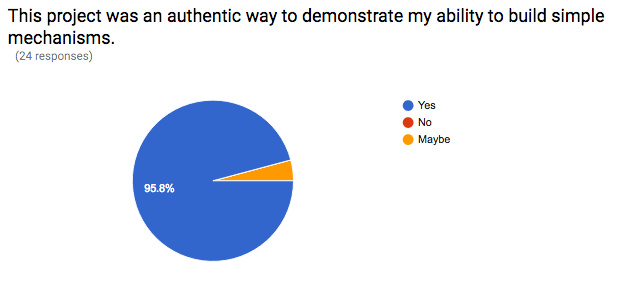
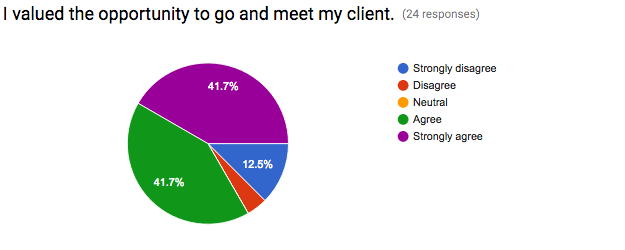
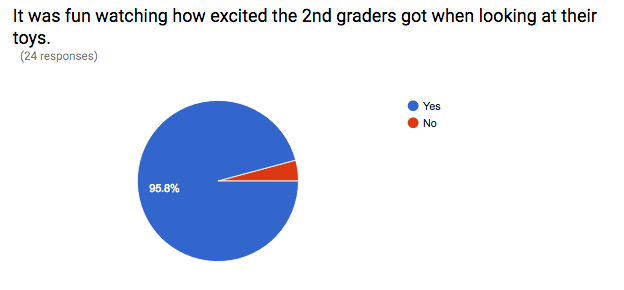
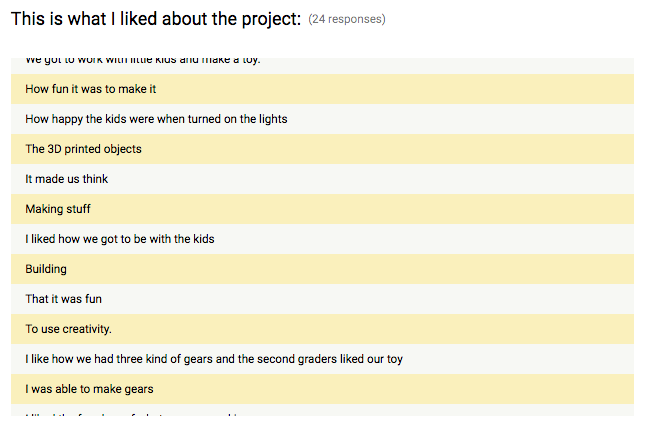
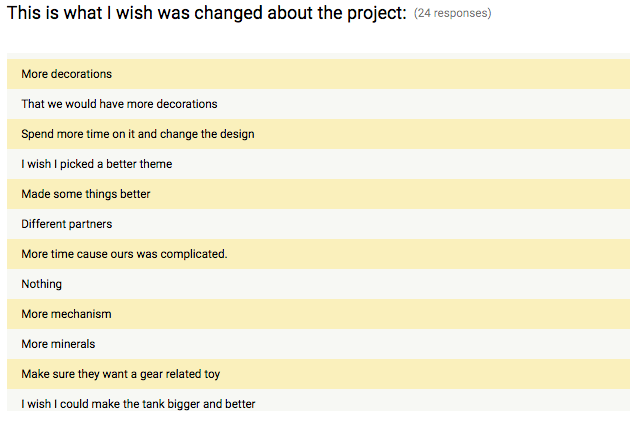
Finally I wanted to share the feedback that I received from my students.


Sunday, October 23, 2016

RWL Project Progress Update

Real world learning is taking a standard or topic in school and having students apply it to an authentic experience. It’s when students can take the content being learned and create something that can be seen in real life. This past month, I have been working on a RWL project with my 8th grade Advanced Robotics class. This is an elective class, so it seemed like the perfect class to spend some time experimenting with something new.

The RWL project my students are working on right now involves mechanisms and the design process. My 8th graders have been paired with 2nd grade clients. Their design challenge is to build a working mechanical toy for their clients, based on their interests. This project involves a lot of collaboration with another teacher in our cohort, Kory Graham (@korytellers). Kory is having her 2nd graders, in their Innovations class at our primary school, learn all about gears and motion on their end.

One of the tools we have been using a lot for this project is Padlet. This has been a pivotal communication portal for the students. We have been able to have the 8th graders ask their interview questions, similar to design thinking empathy interviews. Have the 2nd graders answer these questions, and give updates throughout the project.

This platform is easy to use, my students were simply able to add their own block to the padlet “wall” without signing up. The video attachment is also very easy to use. Pictures of the collaboration are shown below.


The project has been going very well so far. Both sides are very excited to be working together. As far as sharing the final products, our classes do not meet at the same time during the day. So we will have to drop off the toys one day, let the 2nd graders play with the toys for a day, record their feedback, and then pick up the toys to bring them back to the middle school. Feedback will be given to the 8th graders by both myself and the 2nd graders.

Sunday, October 2, 2016

Real World Learning Empathy Reflection

Empathy is an important part of design thinking. Learning about your client before you start designing solutions for them is very valuable. For my Real World Learning project, I interviewed four different students. Two male students, and two female students. One each from 8th grade and 6th grade. I decided to ask for volunteer students in my classes, I received many offers, but tried to go with a variety of student types. Some who were very active in class, and others who were quieter or not as engaged in class.


There are many things educators can learn from empathy interviews with students. I learned a lot about the personal interests of my students. All of them had strong family times, even if they were all from different upbringings. I believe the family/home life of a student strongly affects their learning tendencies in school. Another strong take-away I had was that all four students knew what they wanted to do when they grow up. They all have dream jobs, and great reasons why they want to do those jobs in the future. These passions also lead to how they think school is for them. One student enjoys science more because they want to become a marine biologist when they are older, while another really enjoys Industrial Tech, because they dream of becoming a farmer, like their dad.

Taking time of our busy schedules as teachers to interview students is difficult to think of doing, but afterwards, I feel that I can shape my lessons, projects, and activities in class so much more effectively for my students. Even though they are in middle school, the students are able to explain the ways they learn best. It was very informational to hear that they enjoy hands-on projects. Any time they get to get up and move/build/create in class is one of their favorite times. I can relate to this, even as an adult learner, I am definitely much more engaged when I am being active in my learning.

My process through design thinking is just beginning to happen, and already I feel it will lead to some awesome success in student creation. Now that I know how my students think and feel towards school, I can use this information to drive my Real World Learning project forward onto the next phase - Defining the Solution!

Sunday, July 31, 2016

Genius Hour Project Reflection

This genius hour project was overall a wonderful experience for me. The timeline of the course with reading the book, the Innovator’s Mindset (by George Couros) fit well with the goals of this summer course. Reading the book opened my mind to other ways to empowering students, and how as teachers, we can shape the way we teach our classes and improve the way students are taught in school.

With my genius hour project of creating a genius hour class, I was able to spend the time that I needed to focus on my individual goals. Instead of doing “busy work” with forced reading, I was able to take control of what I needed to accomplish. Researching all about genius hour, connecting with other experts on twitter, and spending the time planning what helped me create a plan for my GH class and complete this summer project.

Obviously, I see the value in letting students do something like this, because I planned an entire elective course focussing on this very topic. Being able to go through the process myself helped a lot because I was able to see firsthand where students might struggle with the amount of freedom given. And if I struggled to focus at some points along the way, I know that my 6th graders definitely might face this same challenge. Knowing this I was able to plan in some extra meeting times with them, and create more structure in terms of their researching and journaling.

Reflection is a large part of learning that I am working more on in my professional life. As I go through the semester with my genius hour class, my goal is to blog along the way, or at least keep track of successes and failures. I love experimenting and know that this first year of elective courses will definitely be an experiment but I am looking forward to the challenges and seeing what solutions can be made! Just knowing all of the awesome student projects that will be created from this class is really exciting for me and I can’t wait for the school year to see what happens!

Wednesday, July 27, 2016

Motivation in the Classroom

Having students who are motivated in the class to learn and complete projects are always a goal of mine and probably many teachers. I’m constantly trying to increase motivation for students and realize that this will never be 100% perfect for all of my students, but it is something that I can strive to work on and continuously improve!

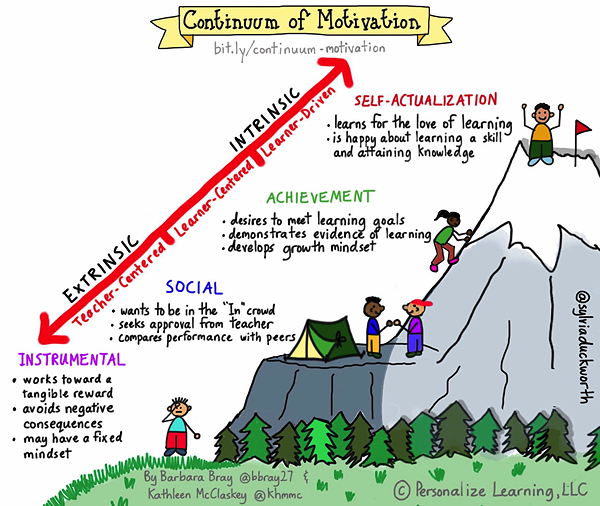
There are many different types of motivation. The graphic below does a great job of visualizing this in the Continuum of Motivation.


For myself personally, as a student, I was most of time motivated socially and achievement based. I wanted to please the teacher, and receive a good grade in the class. As a teacher now, I try to get students to be motivated by extrinsically, but intrinsically.

For middle school students, I think social motivators are very common. Kids want to fit in and be liked by their peers. I have been guilty of also using this in my class as a form of competition for students and classes. Whether it’s a review game that puts the class against one another, it seems to help my students want to study more. When it comes to little things like that I don’t feel it entirely bad or wrong to do. However, if my goal is to have student motivated to learn and grow as individuals because they value that education, I should try and change my mindset on this.

Thursday, July 7, 2016

Genius Hour - Researching Begins!

For my summer grad class, we have a Genius Hour Project which is an opportunity for us to research, plan, and implement any project of our choosing. This fit very well with my goals for next school year, as it has given me the perfect chance to plan out a new Genius Hour course I will start this fall. This GH class will be an elective class for any 6th grade students and will last one semester. The class will meet every other day and will be 45 minutes. Below are my first steps of planning out the project.


Now it’s time for some research! Here is some of the great information I found out so far about Genius Hour classes.

I was lucky enough to connect with some great experts via Twitter like @JoyKirr who shared me a Genius Hour Live Binder (https://t.co/rmH6P9tf8Q) with several different resources from a wide variety of teachers who had created GH classes or projects. The first link I went to was a Standards-Based Genius Hour (http://www.teachergoals.org/genius-hour.html). This was a great blog post that went through how to first spark excitement from students, then have them create their Driving Questions, which is similar to project-based learning. The main idea behind this style Genius Hour was that they took their core subject standards and had students focus their genius hour project around a simplified version of that standard. What is unique with my course, is that I have the freedom to not have any standards, but will incorporate the ISTE standards found here (http://www.iste.org/standards/standards/standards-for-students). One final take away I had from this source was that the teacher did not allow any poster presentations, powerpoints, or any other traditional projects. This is a great way to incorporate some of the digital literacy skills.

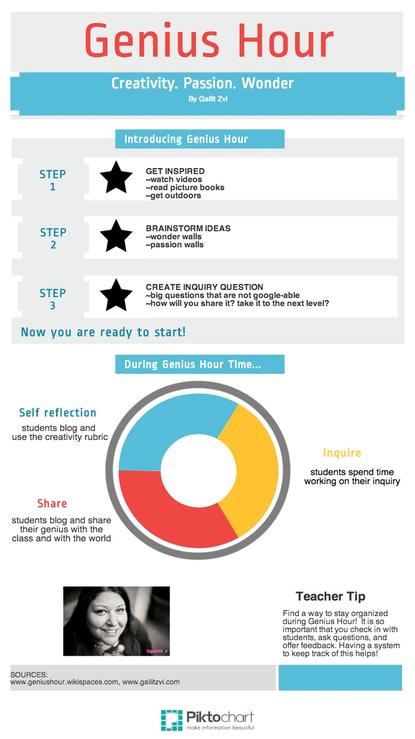
Genius Hour inforgraphic.jpg
Another great tip - Stayed organized and create a tracking system of student-teacher feedback!

Other great information I collected from the Genius Hour Live Binder.

  • I love this idea and believe I can make it happen for my first semester class. All submissions are due September 30th for the 2016 fair. This might be a nice first half of the semester project.
  • This site also shared a great resource for students, “Googleable vs Non-Googleable” questions. (Link: http://notosh.com/lab/googleable-vs-non-googleable-questions/)

Image result for genius hour fair how to submit


This was another awesome website that shared many useful tips and their experience with having students focus an entire quarter on one genius hour project. Below were my take-aways:
  • Proposals - students needed to create a pitch under 30 seconds and explain why they wanted to do their GH project and sell it to the audience.
  • End Product - the result of the genius hour needed to be a product of some sort, whether it was a book, a new invention, or a documentary. The teacher felt this would help motivate students to spend time moving from the idea phase to producing phase nicely.
  • Blog - Students blogged their progress weekly.
  • Final Presentation - At end of class, students gave a 5 minute presentation to community, teachers, and parents) with parent permission.
  • Assessment - This was directly taken from the teacher’s blog (Rubric Here).
    • The Proposal (Is the proposal on-time, and does it address the required questions appropriately?)
    • The Blog (Does the post address the required topic? Do you post each week?)
    • The Product (Did you successfully move from idea phase to production phase, and do you have something to show at the end of the year?)
    • Productivity (Are you spending your Genius Hour time by actively and passionately working on your project? If not, we need to quickly adjust the project so you are working on something that is intrinsically motivating. This is less objective, but if I see students not being productive, I will intervene.)
    • Final Presentation (Does your presentation meet all of the required elements? There will be a rubric - ask for it two weeks before you present.)


All of the above are very very helpful for me and I will use them to shape my course. Seeing all of the wonderful examples of excited and empowered students really reinforces the reason behind create this opportunity for students and I’m looking forward to the next phase - planning!

Saturday, April 9, 2016

Final Reflection on Connection

Over the past two months, I have learned a lot about what it means to be "connected" in the professional and educational world. All from creating a PLN, to connected projects in school, I know I will continue to work towards some of my professional learning goals in regards to this topic.

After completing a larger project that incorporated connection for the students, there were a few points that I can take away from the experience. The first, and one of the most important aspects I learned from student survey results, was that my class does see the value in connected to a global audience in school. I believe this is the key to creating new projects that result in authentic work. Students need to see that the work they put out there is being viewed as important enough for others to see. Having a real audience gives students purpose for this project and increases the stakes for their final products.

Another take-away I have from this global learning project, is to incorporate blogs, but really make a purpose for them. I added in blogs because I wanted students to reflect and have their reflections public, but I don't think I voiced the importance of the blogs or how to successfully write a blog post before I assigned them. In the future, I will do this and also have more interaction from the students in class, and perhaps experiment with bringing in expert feedback/input into student blog posts.

Connecting to global experts can be challenge. If I am going to continue to successfully create projects like this past one, I need to really know who I want my students to reach out and how they will be expected to interact or use the feedback. For this first trial run, I had students find the experts and reach out to them, after this experience, I now know that again, I will have to take time to teach the process of reaching or just provide some experts.

Overall, I enjoyed the extra level of connectedness within this project. I feel the students stepped up to the challenge and the end result were some really unique and creative products. I will continue to create opportunities for connection in my classroom and professional career!

Wednesday, April 6, 2016

Student Survey Results on Global Connection within Enrichment Project

My students were all asked to evaluate how "connected" they felt they were within this project. To increase a global connection, I asked all groups to reach out to one global expert. I left the type of expert out, but I did give them a few examples of good people to contact. I wanted students to find out more about their animal, and different examples of enrichment. Because this was a zoo and wild animal centered enrichment toy design project, many of the students decided to reach out to the Minnesota Zoo. However, they had a difficult time getting into contact with anyone.

Other students had success when they emailed specific people. One group, who had the cougar as a client, emailed an in-state, Wild Cat Sanctuary, and received a great email full of information about cougars in general and how they enrich the cats. The group that received the input from this organization was very excited to hear back, and used the information to their advantage.

Below are the results from the student survey.

The first question I asked students centered around blogging. I had never required students to blog during a project, but I did like the way it required students to reflect during the design process. Based on the survey results, about 63% of my class agreed with me.


Next up, I asked how many students heard feedback from their experts, either global or local. Local experts being the Animal Caretakers from Zollman Zoo at Oxbow Park, who we worked with for this project. Then below this, I asked who they reached out to for a global expert, and many answered with Zoo experts or other animal experts.


After asking about specifics, I wanted to know whether 7th grade students see the value in reaching out to a global network. And I was very happy to see that they do see this as an important aspect in school today! Lastly, I was curious if students would have liked an extra dose of social media added into the project, which surprisingly, most said no.


Sunday, April 3, 2016

Final Prototype Test Day at Oxbow

On Monday, March 21st my class of seventh grade students and I all headed out to Zollman Zoo. The projects that the students had created (as mentioned in previous posts) were the result of creativity, hard work, and excitement. Now, it was the day to go back out to the zoo and test out their enrichment toys with the animals.

It was a great trip! Below are some pictures and videos with students setting up the toys in the exhibits and results from some of the animals.


All of the students had a blast at the zoo. The only complaint I received was that they wished they could have stayed longer. Having a local connection as valuable as this is something I intend to use as long as they are willing to let us! Adding an extra connection to this project, via student blog posts, and reaching out to global experts, was a positive that I saw in the overall quality of the enrichment toys produced with this class. 

Connection is definitely something I will continue to work on and use in my future projects!

Sunday, March 20, 2016

Connected Project Update

My students have been working very hard this past week. As posted in earlier blogs, my 7th grade STEM class is completing an Enrichment Design Project. This project is one of my favorites because of the level of engagement from the students and how we have been able to work with our local nature center/zoo at Oxbow Park.

So, last week Thursday, my student visited the zoo and made their primary observations. On Friday, an Animal Caretaker came into the classroom and gave the class a run down of animal enrichment, the specific animal characteristics and preferences when it comes to designing toys for them. At this point, I hadn't even been able to really get into too much detail about the project with students. I was worried about this, because I didn't know if they would ask the right questions to the Animal Caretaker when she came in. However, I found out that the kids had no problems finding and thinking of questions to ask her. It always amazing me the creativity they demonstrate!

Monday was when I really gave in-depth directions for what I was expecting from students for the project. I didn't want to give away any limiting instructions on their designs, but I just let them know that it had to be (1) safe, and (2) they needed to show some sort of reasoning behind their design.

Then, I started to explain how I wanted students to connect outside of our local community. Each team, consisting of 3-4 students was required to write three blog posts throughout the project and include a final reflection. I've never had my students blog before, so I wasn't sure how much they would write, so I told them they had to write at least one paragraph per post. Below are some example of the posts I received. In the future, I will make sure students read other classmates' posts and respond.


The second added piece of "connectedness" I added to the project, was that I wanted students to reach out to global experts.

Again, never having done this before, I was a little concerned who they might hear back from. So, I told them they didn't need to worry about hearing back from the experts, but I wanted to see evidence that they tried to reach out.. Then I went into a little bit about email etiquette and what to expect.

Right away, I had one team send an email to a reporter who had written about Como Zoo and heard back. I had many students reach out to the MN Zoo and also some other zoos around the country. It will be interesting to see who hears back from their contacts.

Finally, on this past Friday, the students presented their prototypes to another Oxbow Animal Caretaker. I was very impressed by the students and their products. I think they were proud of them as well. Some of their "crazy" ideas on paper, actually became a reality because they were motivated and determined to create them!


This upcoming Monday, we will head back to the zoo to give the toys to the animals and see how they react!


Sunday, March 13, 2016

Start of Global Learning Opportunity

A few weeks ago, I mentioned that my 7th grade students would soon be starting an exciting Animal Enrichment Project. We have now started the project and it is going very well so far. One of the things that I really enjoy about this project is that the students have an opportunity to visit a local part of their town, that is an amazing resource to have so close to school.

Even though the project has just started, I am already thinking about how I can improve parts of the project for the future. The first thing I would like to change is the amount of time I have! We just got a 3D Printer for our middle school, and of course, I wanted to give the students a mini project where they would have the opportunity to use the printer. However, this cut into my short 9 week time span that I have with my classes. So, on Thursday this past week, my students and I traveled down to Zollman Zoo for day one of the project.

The day before, I had briefly told them about the project, assigned teams, and had them select specific animals to design for. I promised my class I would provide them with more details as the project progressed, but that their main goal for this mini field trip was to simply observe the animals, take pictures and videos of their habitats, and start noticing some enrichment toys they already had in their exhibits. Because we only had one class hour for the trip, we ended up having about 15 minutes of usable time at the zoo, which, for this first trip - was plenty of time.


(Pictured: Some students observing two otters in their exhibits.)


The next day, Friday, I had one of the expert local animal caretakers from Oxbow come into to school, and graciously, present some important information to the students. All of the kids were very engaged and excited about what our guest speaker was saying and it was awesome to hear students ask question after question about their animal's interests, food preferences, senses, and more.

Now that the preliminary parts of the project are complete, the students have about one week to (a) work through the design process, (b) reach out to global experts, and finally, build their prototype before presenting to another animal caretaker from Oxbow on Friday.

On Monday, my plan is to slow the class down a little bit and explain some of the other details of the project. We will be keeping a class blog, where I am asking each group to write three short posts about their project.

More information to come, but from what I have seen so far, I think this class will create some awesome enrichment toys!